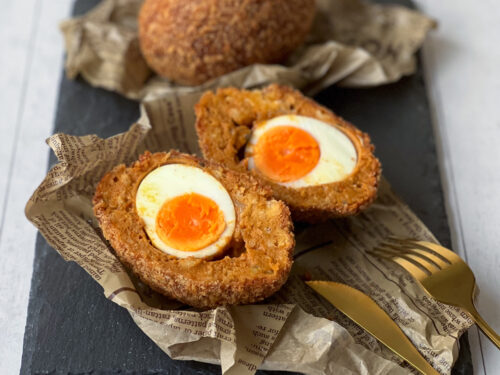
Otah Scotch Eggs
Crunchy on the outside, richly savoury with otah, and soft-centred within.
Servings: 4
Ingredients
- 2 eggs or 6 quail eggs see notes
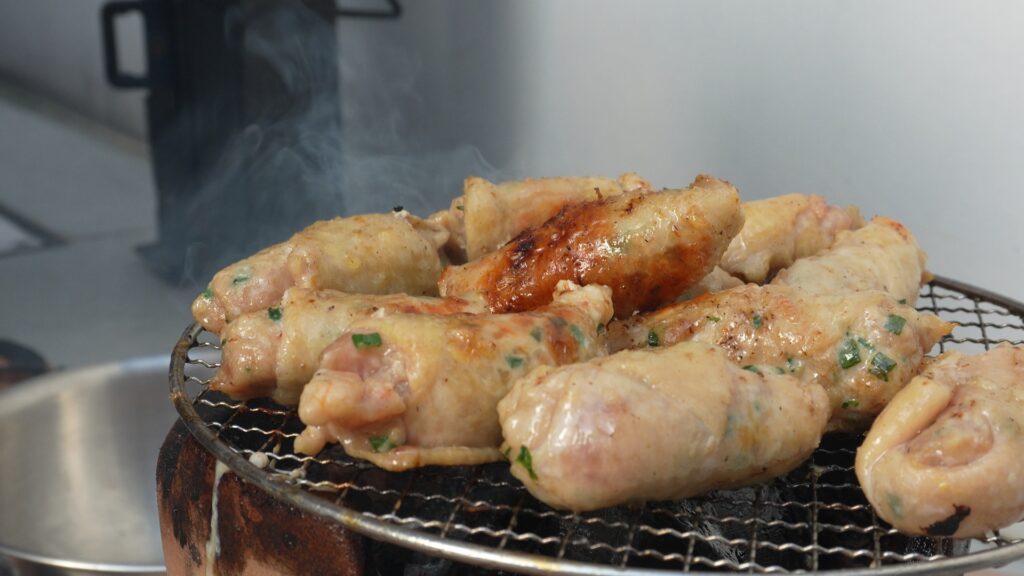
- 2 pc chunky fish otah, thawed approx. 360gm
- 1 egg for coating
- 1 tbsp water
- plain flour for coating
- breadcrumbs (panko) for coating
- oil for deep frying see notes
Instructions
Cook the eggs
- Add water to a heavy-bottomed pot and bring to a rolling boil.
- Gently lower in the eggs and stir slowly with a tablespoon for the first few minutes. This helps centre the yolks.
- Eggs: cook for 6 minutesQuail eggs: cook for 2 minutes
- Transfer immediately into an ice bath and chill for at least 5 minutes.
- Carefully crack, peel, and set aside.
Wrap with otah
- Spread the thawed otah into a flat round layer on a sheet of plastic wrap.
- Regular eggs: use 1 portion of otah per eggQuail eggs: divide otah into 3 portions
- Lightly dust each peeled egg with flour. Place in the centre of the otah and wrap the mixture around the egg.
- Gently toss the wrapped egg from one hand to the other 8–10 times to release trapped air and help shape it evenly.
- Wrap in cling film and refrigerate for at least 1 hour to firm up.
Coat and Fry
- Crack 1 egg into a bowl, add 1 tablespoon water, and whisk until smooth.
- Prepare two trays:one with plain flourone with panko breadcrumbs
- Remove the chilled otah eggs from the fridge and reshape if needed.
- Coat each one in flour, dip into egg wash, then roll in panko.
- For a thicker crust, repeat the egg wash and panko coating once more.
- Heat oil to 170°C, ensuring it covers at least three-quarters of each egg.
- Deep-fry, turning occasionally, until golden brown and crispy.
- Cut in half and serve immediately while hot.
Notes
- Eggs used here weigh approximately 63g each.
- The cooking times listed are based on room-temperature eggs and are designed to give jammy yolks. If using chilled eggs straight from the fridge, allow an additional 30 seconds of cooking time. For hard-boiled yolks, cook longer to your preference.
- Otah: No specific brand required — use your favourite chunky fish otah.
- Double-coating with panko gives a crunchier crust.
- I used bubu arare (ぶぶあられ) to add colour and crunch. These tiny multi-coloured rice crackers are commonly used in Kyoto-style cuisine.
- Oil for deep frying: For best results, use a neutral oil with a high smoke point, such as peanut, canola, sunflower, or rice bran oil.