Fried Porridge
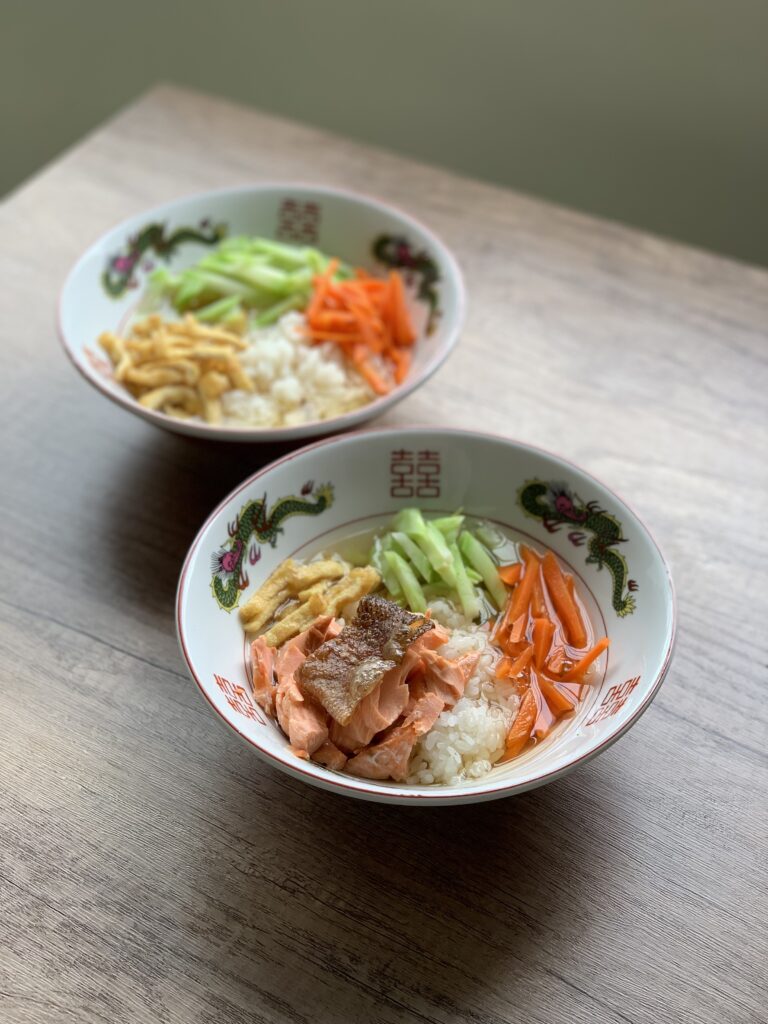
Fried porridge is a resourceful Malaysian-inspired recipe that gives leftover porridge a second life. Cooked over high heat with dried shrimp, garlic, ginger, and sesame oil, it develops a rich, smoky wok hei flavour right at home.
Ingredients
Fried Porridge
- 2 bowls leftover porridge
- 30 g dried shrimps soaked and drained
- 2 dried mushrooms use 3-4 if small, sliced
- 3 cloves garlic minced
- 1 ginger thumb-sized, minced
- 3 stalks spring onion cut into 6cm lengths
- 1 tbsp cooking oil
- 1 tsp dark soy sauce
- 1 tsp soy sauce
- tsp sesame oil
- 1 tsp oyster sauce or mushroom sauce
- white pepper to taste
Garnish
- spring onion chopped
- fried shallots
- sesame oil
- white pepper
Poached Chicken
- 2 pcs chicken breast remove skin
- 500 ml water
- 3 stalks spring onion white part only, cut into 6cm lengths
- 4 slices ginger
- ¼ tsp black pepper
- 1 tbsp cooking wine Shaoxing wine recommended
- 1 pack instant dashi pack
Instructions
Poached Chicken
- Start this first as it takes longer
- Add water, spring onion, ginger, black pepper, and cooking wine into a pot. Bring to a boil.
- Add the dashi pack and let it simmer for about 5 minutes, or according to the package instructions.
- Discard the dashi pack and bring the soup back to a full boil on high heat.
- Add the chicken breast into the boiling soup.
- Turn off the heat immediately and leave the chicken to sit in the pot for at least 10 minutes to cook through gently.
- Remove from the pot, slice, and set aside until ready to serve.
Fried Porridge
- Heat oil in a frying pan or wok over low heat.
- Add the garlic, ginger, dried mushrooms, dried shrimp, and spring onion. Stir well and cook over low heat until golden and fragrant.
- Increase to medium-high heat. Add the sesame oil, dark soy sauce, and soy sauce. Stir to combine. (Adding sesame oil at this stage creates a home cook's version of wok hei, as sesame oil has a lower smoke point.)
- Add the leftover porridge. Stir well and cook over high heat for a few minutes until heated through and thicken
- Plate and serve with the poached chicken. Finish with a drizzle of sesame oil, a sprinkle of white pepper, chopped spring onion, and fried shallots.
Notes
- Wok hei at home: Achieving true wok hei requires very high heat, which is difficult on a home stove. Adding sesame oil before the porridge helps to create a similar smoky, toasty flavour at lower temperatures.
- Dried shrimp: Soak the dried shrimp in water for at least 15 minutes before using to rehydrate and soften them. Do not discard the soaking water — it adds extra umami flavour and can be added to the porridge if needed.
- Shaoxing wine: Any cooking wine works fine here. Shaoxing wine adds a deeper, more complex flavour to the poached chicken soup.
- Porridge consistency This recipe works best with leftover porridge that has thickened overnight in the fridge. If your porridge is too watery, cook it down slightly before frying.
- Chicken skin: Do not discard the chicken skin. Save it to make chicken skin gyoza another day.
- Milk carton tip: Do not throw away clean milk cartons. They make excellent one-time disposable mats for slicing cooked food on the chopping board — hygienic and practical.